Why We Stay Quiet When We Already Know
Most people who discover a betrayal do not confront it that night. They wait. Therapists say the waiting is not weakness — it is arithmetic.
Elena Marsh · Aug 26, 2026
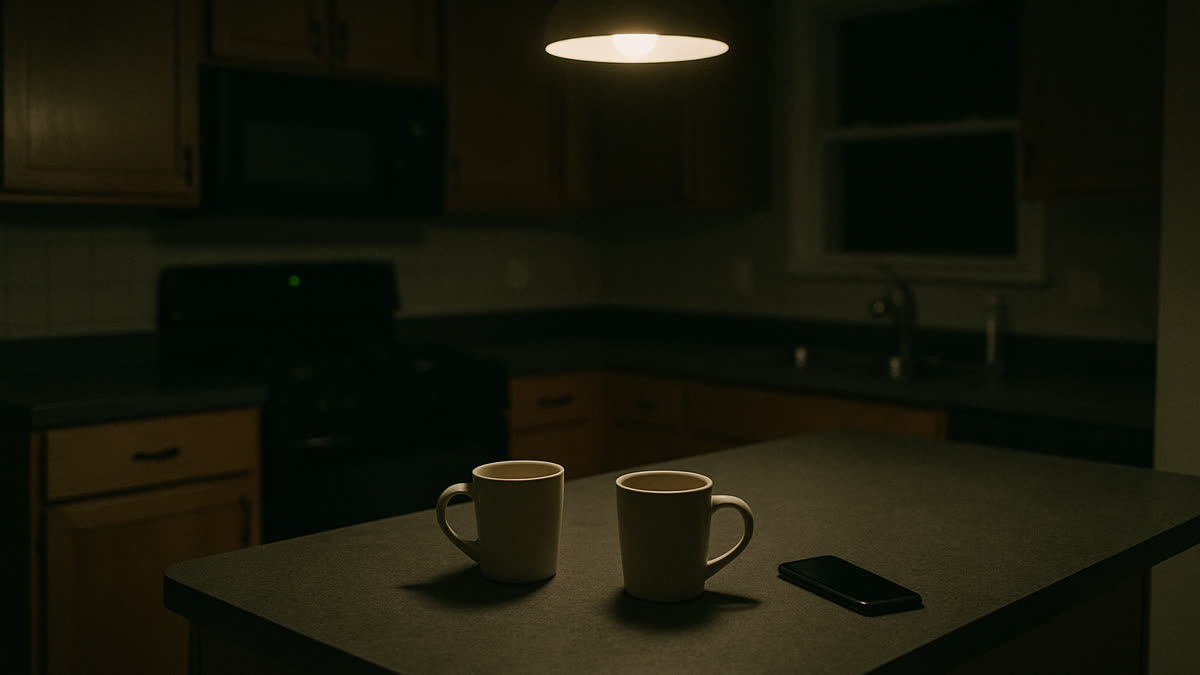
There is a moment that almost every account of infidelity contains, and it is rarely the moment people expect.
It is not the discovery. It is the silence afterwards.
A woman notices a receipt. A man reads a message over a shoulder. The evidence is there, it is not ambiguous, and it is not going away. And then — nothing happens. Days pass. Sometimes months. Life continues in a way that, from the outside, looks untouched.
People who have never been through it tend to read that silence as denial. Those who have been through it describe something else entirely.
The silence is usually a calculation, not a refusal.
Counsellors who work with couples after an affair describe a consistent pattern. The moment a person confirms what they suspected, they stop thinking about the relationship and start thinking about logistics. Where would I live. Whose name is on the lease. What happens to the children's school year. How much of this money is actually mine.
Confrontation ends the information. The moment you speak, the other person starts deleting, explaining, repositioning. As long as you say nothing, you keep learning.
That is not passivity. It is the only leverage available to someone who has just discovered they are not in the position they thought they were in.
The second reason is stranger, and harder to admit.
Many people wait because they are not yet certain what they want the outcome to be.
We are told that betrayal produces a clean reaction — outrage, then departure. In practice the first feeling is often closer to vertigo. The person you are angry at is also the person you would normally go to when something terrible happens. Both of those facts are true at the same moment, and neither cancels the other.
Waiting is what people do while those two facts fight it out.
What the silence costs
It is not free. The people who describe waiting also describe what it did to them: sleep that stopped working, a permanent low-grade alertness, the exhausting performance of ordinariness at dinner.
And it changes the eventual conversation. A confrontation that happens six months late is a different conversation from one that happens the same night. By then the person waiting has already grieved privately, already made decisions, already moved somewhere the other person cannot follow. Partners often say the hardest part was not being caught. It was realising they had been alone in the marriage for months without knowing it.
If you are the one waiting
Three things are worth holding onto.
Write down what you know, with dates, somewhere the other person cannot reach. Memory reorganises itself under stress, and you will want the record later, whichever way you go.
Talk to one person outside the situation. Not to build a case — to keep your own account of reality intact. Prolonged silence has a way of making people doubt what they plainly saw.
And set yourself a limit. Not a decision, a limit: a date by which you will do something, even if the something is only "tell one professional". Waiting is a strategy. Waiting indefinitely is just the situation happening to you.
The silence is not the failure. Staying inside it forever is.